Day 17

Touch


One of the most important connections an individual makes to the world, is through touch. It is what provides us with experience; informing are perceptions and stimulating our responses. Touch is a sensation; an exchange we give to objects, people, and ourselves.

There are many different types of touch; pressure with palm or flat surfaces of fingers, pressure with fingertips, thumb, brushing, scratching, diagonal pressure across fibers, pulsing, and pumping, bone manipulation, and tendon/ligament support.


Day 16

Hand

The bones of the hand consist of 8 carpals in the wrist area, 5 metacarpals and 14 phalanges. Because of the quality of small muscles in the hand, dancers are able to do intricate and specific movements. Also the hands have a high ration of nerve endings to muscle fibers ratio and is a highly sensitive communicator and receptor of the environment with the sense of touch.

Day 15

Forearm, Wrist, and Hand


Our hands evolved from paws where their functions changed from weight bearing to manipulation and articulation. From our hunckering position through evolutions our hands were free to get food from plants and trees as well as to groom and have air-borne locomotion.

Day 14

Shoulder Girdle


The shoulder girdle is our assistant in reaching, holding, and pushing away. Though it is a series of wrapped bones, it is separate from our rib cage.

Day 13

Breathing


The moveable ribs protect the lungs and assist in the breathing process. The intercostal muscles between each rib lift the lower rib it's connected to in order to increase the volume inside the thoracic cavity during an inhale. The sternum protects the heart and other organs as well from impact. The dome-shaped diaphragm is made of both contractile muscle fibers and tendencious connective tissue so it has a firm shape and can respond to stretch. The heart is massaged by the movements of the lungs and diaphragm.

Day 12

THORAX: The Vertebrae and Ribs


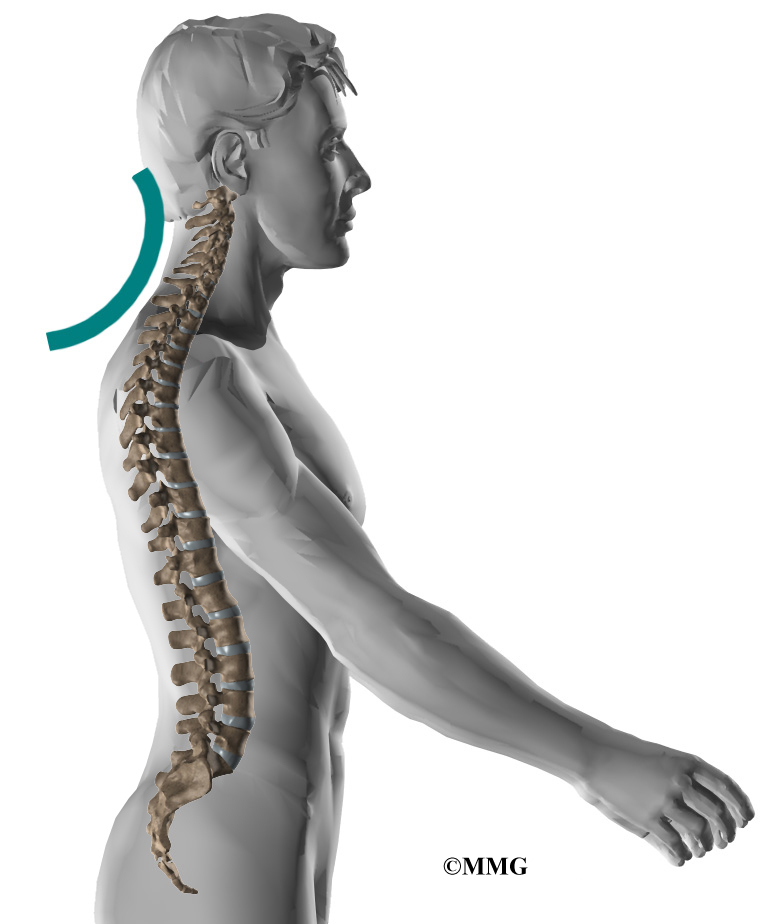
The spine includes seven cervical, twelve thoracic, five lumbar, five fused sacral and four fused coccygeal vertebrae. The cartilaginous fluid-filled disc that are in between the bodies of each of the vertebrae segments, are cushion to our spine.

A vertebra consists of a body, spinous process, two transverse processes, and a foramen (hole) for the spinal cord (as illustrated above).

The thorax (ribcage), assists us in breathing and also serves as a protector of our heart. It consists of twelve ribs on each side; seven "true" ribs and five "false" ribs. The bottom to our considered "floating" ribs because they are directly attached to the thorax, but instead in the abdominal wall.

Day 11


AXIAL SKELETON: Skull to Spine


The axial skeleton contains the skull, spine, the "rib cage," and the free-floating hyoid bone. More specifically, the spine involves a column of vertebrae: cervical, thoracic, lumbar, sacral, and coccygeal. We have to have mobility in opposing curves of the spine to have adequate postural alignment. Each section of the "S" shape curve of our spine needs to be responsive, instead of thinking of the spine being straight.

Our plumb line is the vertical axis of the spine that connects through the body into the ground and up into the sky. Any change in one body part affects the movement of the whole; as well as if the spaces between the bones are aligned then the bones will be aligned.

The body is never still because movement is key to balance.